
Artificial Intelligence is no longer a futuristic concept—it is a present-day reality reshaping how public sector organizations operate. For Canadian municipalities, the pressure to innovate and improve service delivery while facing budget constraints and staffing shortages makes AI an attractive solution.
However, local governments operate under strict regulatory, privacy, and accountability frameworks. The rapid rise of consumer AI tools like ChatGPT or Claude has introduced significant risks, particularly the unsanctioned use of "Shadow AI" by employees trying to work more efficiently.
This comprehensive guide is designed for city managers, IT directors, clerks, and municipal professionals. It deciphers the complexities of municipal AI, outlines the tangible benefits, addresses critical privacy concerns regarding FOIPPA and PIPEDA, and provides actionable frameworks for safe, compliant AI adoption in your organization.
What is Municipal AI?
Municipal AI refers to artificial intelligence tools purposefully designed or configured for the unique operational, regulatory, and security requirements of local governments.
Unlike general-purpose chatbots, municipal AI systems prioritize accuracy, citations, and data security over creative storytelling. They understand the nuances of local governance: bylaws, council minutes, policies, and the vital importance of protecting citizen privacy.
Municipal AI vs. Consumer AI
| Feature | Consumer AI (ChatGPT, etc.) | Municipal AI (TrueNorth) |
|---|---|---|
| Data Residency | Often global/US | Strictly Canadian |
| Model Training | May train on your inputs | Zero-training guarantee |
| Responses | Generalized, prone to hallucination | Grounded in specific documents with citations |
| PII Handling | Ingested and stored | Automatic detection & redaction |
Key Benefits of AI in Local Government

Implementing purpose-built AI transcends mere technological upgrades; it fundamentally enhances how a municipality operates and serves its citizens.
1. Drastic Time Savings on Administrative Tasks
Municipal workers spend countless hours on routine tasks. AI assistants can dramatically reduce this friction:
- Document drafting: Generate starting templates for reports, memos, and public communications in seconds.
- Information retrieval: Finding specific clauses in decades of council bylaws takes minutes instead of hours. (Estimated 10-20% time savings on document research).
- Meeting Transcription: Automating municipal minutes turns hours of transcription work into a 5-minute review process.
2. Improved Accuracy and Consistency
AI equipped with municipal context reduces human error by cross-referencing vast amounts of internal data instantly, ensuring that responses to citizen queries are consistent with existing bylaws and policies.
3. Better Resource Allocation
By automating routine administrative burdens, highly trained municipal staff can redirect their focus toward complex problem-solving, strategic planning, and direct citizen engagement.
Understanding FOIPPA Compliance & Data Residency
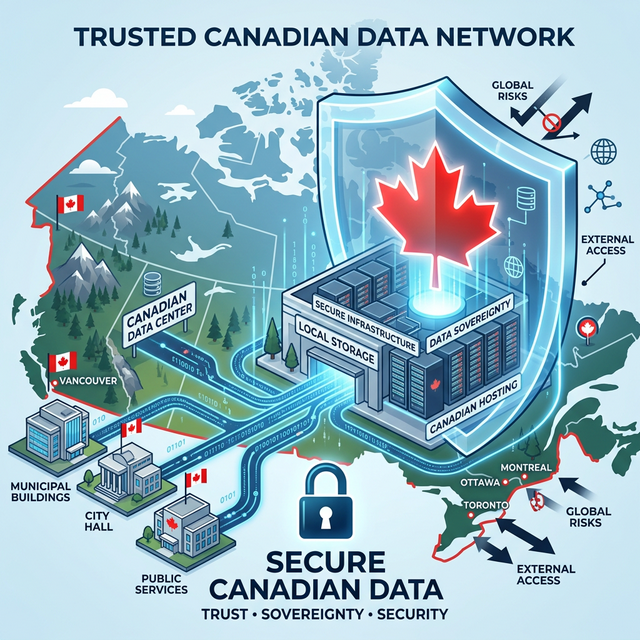
The biggest barrier to AI adoption in Canadian municipalities is privacy compliance. Shadow AI usage (employees using unauthorized tools) presents a severe threat to data security.
The Canadian Data Residency Requirement
Under the Freedom of Information and Protection of Privacy Act (FOIPPA) in BC and similar acts federally (PIPEDA) and in other provinces, public bodies face strict controls regarding personal information. Specifically in BC, Section 33.1 generally prohibits disclosing personal information outside of Canada.
If a municipal employee pastes a citizen's complaint into a U.S.-hosted AI model, that constitutes a cross-border data transfer, potentially violating FOIPPA. For a deep dive, read our article: Why Data Residency Matters for Canadian Municipalities.
shieldHow TrueNorth Ensures Compliance
- Canadian Data Residency: All data is stored in Canada (GCP Montreal region) with customer-managed encryption keys (CMEK).
- Zero-Training Guarantee: Your municipal data is never used to train foundational AI models.
- Automated PII Redaction: Built-in Data Loss Prevention (DLP) scans for and redacts Personally Identifiable Information (SIN, health numbers, names) before processing.
- Audit Trails: Comprehensive logging of AI usage ensures accountability and transparency for FOI requests.
Top 10 High-Value AI Use Cases for Municipalities
Where should you start? Based on our work with Canadian municipalities, these are the highest ROI use cases:
Bylaw Research and Comparison
Instantly compare local zoning bylaws with neighboring municipalities to find precedents.
Council Meeting Transcription
Convert audio to distinct speaker-identified text and generate automated, formatted minutes.
Policy Summarization
Translate 200-page dense provincial regulatory documents into readable 2-page executive summaries.
Grant Application Drafting
Rapidly generate first drafts of grant proposals using existing municipal data and historical applications.
RFx Document Creation
Create Request for Proposal (RFP) templates based on previous successful municipal procurements.
Citizen Communication
Draft empathetic, clear, and policy-accurate responses to complex resident inquiries.
Report Generation
Compile data from various departmental inputs into cohesive staff reports for council.
Historical Archival Search
Find exact decisions made in council meetings from years past by conversing with your archives.
Plain English Translation
Rewrite complex engineering or legal jargon into web-ready, accessible content for citizens.
Staff Onboarding
Create interactive, conversational HR guides where new hires can ask questions about internal policies.
The Complete AI Vendor Evaluation Checklist
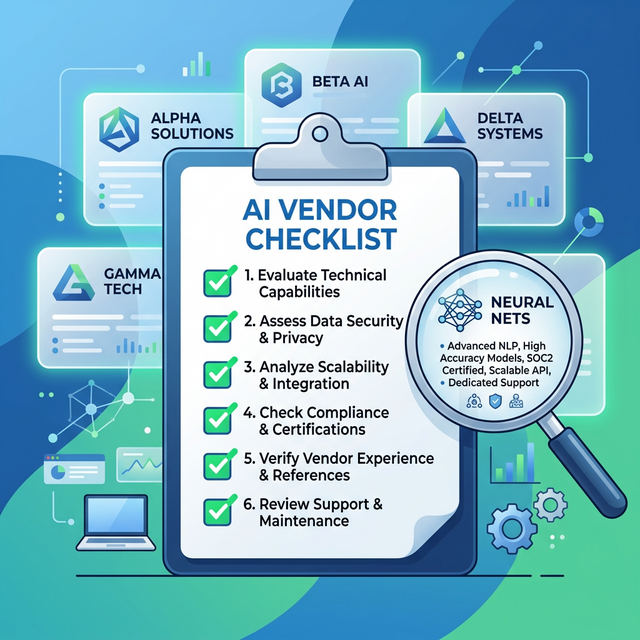
Not all AI is created equal. When evaluating vendors for your municipality, use this checklist to ensure rigorous compliance:
- check_boxData Residency: Can they guarantee primary documents and database records are stored residently on secure servers in Canada?
- check_boxData Training: Do they explicitly state in their MSA that your data will not be used to train their models?
- check_boxPII Protection: Do they offer active, automated Data Loss Prevention (DLP) before data reaches the LLM?
- check_boxData Retention: Do they offer customizable data retention and auto-purge policies?
- check_boxTransparency & Citations: Can the AI prove its outputs by citing exactly which source document it pulled information from?
- check_boxAccess Controls: Do they integrate with existing Identity Providers (SSO, Azure AD) for Role-Based Access Control?
How to Get Started Safely
Rolling out AI across a municipality requires a phased approach.
- Establish an AI Policy: Before deploying tools, write a clear Acceptable Use Policy for generative AI. Delineate what constitutes public data versus sensitive data.
- Identify a Champion Department: Start with a department eager to innovate, such as the Clerks department or Corporate Services.
- Deploy a Secure Platform: Implement a secure, compliant AI solution like TrueNorth Civic AI to immediately curb the use of Shadow AI.
- Start with Public Data: Run pilot projects using publicly available data (bylaws, past agendas) before moving to internal operational data.
- Train and Scale: Provide staff training on prompt engineering and the limitations of AI, then expand access across the organization.
Further Reading & Resources
Expand your knowledge with our specialized guides explicitly tailored for Canadian municipal professionals:
Data Residency Deep Dive
Learn exactly how PIPEDA and FOIPPA impact your choice of cloud and AI vendors.
The Shadow AI Threat
Identify and mitigate the risks of employees using unauthorized consumer AI at work.
Automating Minutes
A practical guide to cutting clerical workload by 80% using secure AI transcription.
Copilot vs. TrueNorth
An honest comparison of M365 Copilot capabilities versus purpose-built municipal AI.
Ready to implement AI securely?
TrueNorth Civic AI provides a Canadian-resident, FOIPPA-aligned platform designed from the ground up for municipal workflows.